Updated 1 February 2012
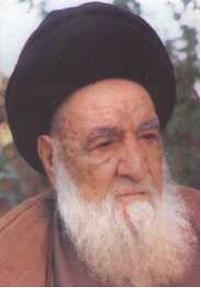 Two decades have passed since the death of Ayatullah Udhma Syed Abu al-Qassim al-Khoei. The lapse of time, however, has not dimmed his memory.
Born in Khoy ( Iran ) on Nov. 19, 1899, he moved to Najaf ( Iraq ) at the young age of thirteen. He studied there and rose to become the most renowned and influential Shia Marj’a e Taqlid after the death of Ayatullah Udhma Syed Muhsin al-Hakim in 1971.
He remained a towering figure in the world of Ulama until his death in Najaf ( Iraq ) on 8 Safar 1413 (August 8, 1992).
Despite the turbulent times under Saddam, he maintained his composure and continued to contribute in imparting Knowledge.
Since he took charge of Najaf's hawza, Ayatullah al-Khoei became the caretaker of all theological hawzas all over the world. Among the most significant of such institutes which he ordered to be founded, and which he
supervised through his representatives, are:
1) In India, he established the Educational Charitable Complex in Bombay which is regarded the largest educational and theological project in the world, and includes various departments; each one of which specialises in a particular activity. It is comprised of elementary and secondary (high) schools,various accredited colleges, a large hospital and a huge mosque.
2) Madeenat al-'Ilm, the city of knowledge, in the holy city of Qum. This is the largest theological institute in the Shi'a world, where more than three thousand students are studying theology.
3) Al-Khoei's Mabarrah in Beirut, Lebanon, which provides cultural andsocial services for a large number of orphan children who have lost theirfamilies during the catastrophes to which Lebanon has been subjected. It
is a five building complex housing an orphanage, a vocational school and an institute.
4) Ayatollah al-Khoei's School and Library of Mashhad, Islamic Republic of Iran. The building is a masterpiece of a marriage between traditional and modem architecture.
5) Dar al-'Ilm School at Najaf al-Ashraf, Iraq, from which highly qualified jurists and mujtahids have been graduating, and which has accommodated more than 200 students of the higher level of theological studies.
6) Numerous other theological studies styled after Najafs hawza located in Thailand, Bangladesh (in West Bengal), India, Pakistan and other countries.
7) Imam al-Khoei's Library at Najaf al-Ashraf, Iraq, which contains 25,000books and 6,000 rare hand-written manuscripts. It was established by his late holiness for the benefit of researchers, critics, and scholars of theology, and it used to publish and internationally distribute quality Islamic literature.
His students rose to prominence both during his time and after. Shahid Ayatullah Syed Muhammad Baqir al-Sadr – who was killed by Saddam – and the present Marja’ Ayatullah Udhma Syed Huseinali al-Sistani are some of his prominent students.
The Holy Prophet (s.a.w.w) said: The death of a scholar is an affliction that cannot be compensated and a void that cannot be filled, for he is a star that has been obliterated. The death of a whole tribe is easier to bear than the death of a scholar. (Mizan al-Hikma)