Updated 15 March 2011
Clean water is a fundamental human need. Water sustains, maintains and improves lives. For many of us, access to safe clean water is a mere matter of opening various taps in our homes. We drink good water, preventing diseases and illnesses from attacking our bodies, and continue to function in an able manner in the society. This keeps poverty and destitution at bay. However, it is a different story for others across the globe.
What is World Water Day?
In December 1992, the United Nations General Assembly adopted a resolution declaring 22 March of each year as World Day for Water to draw attention to the global need for safe water and basic sanitation facilities. World Water Day encourages individuals, organizations and nations to come together to make a positive difference. Countries across the world are invited to devote this Day to highlight the magnitude of the global water and sanitation problem, as well as to bring all stakeholders together to apply solutions that work.
The theme for World Day of Water 2011 is Urbanization and the Management of Urban Water and Waste. The objective of World Water Day 2011 is to focus international attention on the impact of rapid urban population growth, industrialization and uncertainties caused by climate change, conflicts and natural disasters on urban water systems.
The sad statistics
The UN has declared that access to clean water and sanitation is a basic human right. Research suggest that 1.1 billion people lack access to clean water and 2.6 billion people lack access to basic sanitation. All of these individuals suffer the consequences – health problems, economic and social difficulties and inequities. This crisis is killing as many as 5,000 children a day. More importantly, these children are dying every day to an entirely preventable public health crisis.
This is the first time in human history where 50 % of the world's population (3.3 billion people) is living in cities; the urban landscape continues to grow. 38 % of the growth is represented by expanding slums. The highest rates of urbanization are found in Africa and Asia. Today, 18% of the world population consumes unsafe water which is the primary cause of many preventable diseases; this consumption leads to health problems, which consequently leads to social and economic difficulties (WHO). In sub-Saharan Africa, sanitation coverage is a mere 36%.
The lack of adequate sanitation facilities is devastating. In places where these are not readily available, unhygienic conditions fester due to improper disposal of waste, leading to contaminated water. Billions of people are rendered powerless and helpless by the grip of disease and poverty, a vicious cycle that begins with something as simple as lack of basic sanitation such as toilets.
The United Nations has indicated that these water problems across the world are manageable (The 2009 United Nations World Water Development Report).
View further statistics by the UN-Water Decade Programme on Advocacy and Communication.
The World Federation’s addresses the water and sanitation crisis
“Whosoever provides someone water in a place where there is already water present, is like one who has freed a slave. And whosoever provides someone water in a place where there is no water present, is like one who has granted life to a soul; and whosoever grants life to a single soul, it is as if he has granted life to all of mankind.” Imam Sadiq (as)
The plight of the underprivileged living in poverty, who lack access to clean water and sanitation, is of concern to The World Federation of KSIMC based on the religious and humanitarian values enshrined in its constitution. The Islamic principles concerning water ensure that all humans have the right to access water and have the right to quench their thirst. Our values, as exemplified in the martyrdom of Imam Husayn (AS) and his family who experienced severe hunger and thirst only intensifies our drive to reduce global hunger and thirst. As a result, The World Federation adopted a policy paper to understand and develop an action plan on how to meet the water and sanitation needs in the developing world.
What is The World Federation doing to address this problem?
The World Federation has been working to improve access to better water and sanitation by bringing together its membership and partners (including community centers, prayer centers, humanitarian organisations, family foundations and individual donors). As a network extending across continents, The World Federation has technical expertise and resources to share and to this end it is involved in:
• Constructing vital infrastructure of clean water facilities and sanitations projects;
• Raising international awareness among its partners and community members encouraging them to take collective action against this international endeavor;
• Undertaking a thorough needs analyses to measure our performance in this area and identify water and sanitation access;
• Getting involved in incentives to help stop the crisis with our networks;
• Facilitating its partners to monitor quality of water; and
• Finding new and innovative tools and technologies to address this area.
What initiatives has The World Federation carried out to date?
The World Federation’s water appeal, named the ‘Ali Asgar Water Appeal’, has an objective of providing the global underprivileged people with fresh water and basic sanitation. It aims to address poverty stricken communities by addressing the core problem – lack of clean water and basic sanitation. This is inline with The World Federation’s commitment to play its part in achieving the UN Millennium Development Goals.
The Water Appeal was first launched in 2006 with a successful fundraising campaign within its membership. In 2009, The World Federation re-launched the water appeal, and has since been raising funds to build water wells and sanitation facilities in the developing world. The appeal was revamped with a new logo and brochure to create awareness and generate funds. Funds were raised through various means across the membership of The World Federation. In particular, the youth of Europe under the Council of European Jamaat, have worked hard to raise funds within the local community centers. Some of their efforts include a Water Bottle Drive, Press Release and Movie to raise awareness and a Water Fast.
The World Federation supported a number of water projects which include:
Kenya
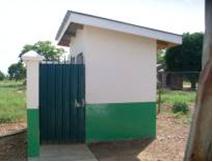
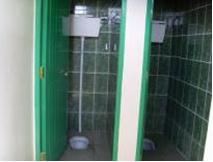
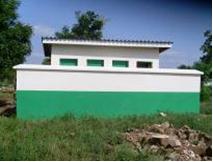
The World Federation constructed sanitation facilities in the rural Dembwa villages of the Tiata Taveta District, including several latrines and water storage tanks. 5 modern gender-segregated toilets and wash basins and a 4,000 liter tanks were set up to collect rain and fresh water from the national pipeline. Four modern toilets were constructed near classrooms in a rural school within the District, together with one 4,000 liter tank.
India, Bihar
The World Federation sponsored the installation of hand pipe borings (used to access ground water) so that water is available in the home of almost every individual living in the villages of in the selected region of Patna, Bihar, India. Now, more than 90% of the underprivileged families are able to drink, bathe and cook with clean water.
Pakistan, Sindh Water Project
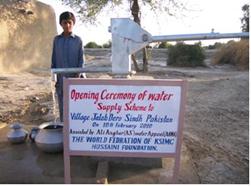
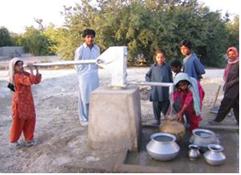
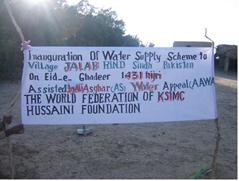
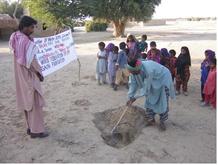
The World Federation approved a total of seven wells to be built in the villages of Jalab Dero, Jalab Khoso, Jalab Rind, Dadan Rustamani, Yaro Peer, Dost Mohammad Shahani and Trundo Rahim Khan, in the northwest District of Dadu in Sindh, Pakistan. These wells provide a clean supply of water to over 16,580 people.
Water well at Jalab Dero:
Water well at Jalab Rind:
India, Lucknow
In Lucknow, the need for clean water was dire. The assessment of our partnering agency was, “due to non availability of pure drinking water, a large number of people are facing water crises and suffering from several viral diseases like jaundice, cholera, and stomach troubles...” The World Federation therefore constructed 2 wells in the villages of Sihin and Amilo in the District of Azamgarh where a total of about 220 homes were served.
Tanzania
The World Federation in partnership with the local partner constructed 2 tube wells and 30 hand pumps in villages in the rural district.
What will the Water Appeal funds be used for?
The World Federation has developed a 5-point action plan where the Water Appeal will focus on the following water and sanitation strategies:
1. Building wells and water pumps
2. Installing water tanks
3. Installing latrines / sanitation services
4. Water Testing
5. Providing chlorine tablets
What regions does The World Federation carry out this work?
The World Federation is working in partnership with its regional members and experienced partners in India, Pakistan, Afghanistan, Kenya and Tanzania to deliver its commitment on water and sanitation.
Why has The World Federation chosen these regions in particular?
We have chosen these particular regions because we have the knowhow, infrastructure and organisational setup needed for water and sanitation projects already present in partnering agencies on the ground. In the future, with increased support from donors, we hope to spread the work into other areas.
What kind of support has this appeal received?
The World Federation has received exceptional support in this Appeal from within its membership since 2005. We are grateful to all all of you who have been instrumental in this initiative. However, we still have a long way to go and need the continued support of all members of our global community.
What ties does The World Federations have with international originations?
The World Federation is a member of End Water Poverty and the Water Network within BOND. It has written to the United Kingdom’s Department of International Development and has contributed to the water development agenda and has engaged with various organisations. As part of the development agenda, The World Federation will continue to engage with various organisations and to partner with its networks and memberships.
How can you get involved?
Addressing the water and sanitation crisis, especially in our community is a global effort and The World Federation cannot do this without the support of all individuals, Members and partners . It is essential that we work together to unite our efforts to make a difference. If you are interested in getting involved, please email relief@world-federation.org
Will my donation really make a difference?
Remember the voices of the children in Karbala pleading for a drink of water? Today, there are thousands of children in Tanzania, Kenya, Uganda and India who are crying out for clean water. Safe clean water is the most precious gift you can give. Unsafe water and poor sanitation cause extremely bad health effects and unhealthy living conditions. Your donation will change lives for the better. Donate now.
The President of The World Federation Dr. Asgar Moledina stated: “The World Federation continues to help and provide clean water and sanitation services to those require it. This will prevent a number of diseases from plaguing the local community. The World Federation would like join the international community in marking World Water day in order to help the poor and underprivileged escape the cycle of urban water poverty. Let us all do whatever is in our ability to make a difference on World Water Day – March 22.”
The International Relief and Development of The World Federation is in the process of developing a directory of individuals who are involved with the NGO sector globally. Please click here to register your support.
For more information on World Water Day, visit http://www.worldwaterday2011.org/
For further information, please email relief@world-federation.org