Updated 24 November 2010
The Mahdi school in Bhavnagar, India started in a villa in 1997 with 72 students. In 2006, the school moved to its newly built campus. In July 2009, there were 1,497 students from Nursery to Standard 10 and 403 of these students were sponsored. The school runs in two shifts – Gujarati Medium in the morning and English Medium in the afternoon. Besides following the syllabus of The Gujarat State Board, the school promotes personal development of the student and encourages extra-curricular activities.
Sister Sakina Dewji, a teacher in Toronto, Ontario had the opportunity to visit India for four weeks this past summer with her colleague Sue McNay. As a part of their travels, they visited The Mahdi school, as well as various centres during the month of Ramdhan.
Here Sister Sakina shares some of her experiences from their trip:
A colleague Sue McNay, and I had the pleasure of spending four weeks in India this summer. We did some sightseeing in Delhi, Agra, Jaipur and Leh before heading to Gujarat, just missing the floods by hours! While we were very fortunate, our prayers go out to all suffering around the globe, especially due to recent flooding in Pakistan, Leh and parts of China.
On August 7 evening we headed to Mahdi School in Bhavnager. The trustee, staff, children, parents and everyone in the community welcomed us with warmth and love. Everyone we met stopped to greet us and talk to us! My friend would introduce herself as “Naam Sue” and they would look at her puzzled and wondering why she asked them their name in response to “What is your name?”!! (Naam Su in Gujarati is what is your name?)
This school was definitely one of the best schools I've visited. Though most children came from poverty, at school they had access to the very best! The trustees supported the staff, who worked well together. Hindus, Muslims, wealthy and struggling, all came together as one, to support the children.
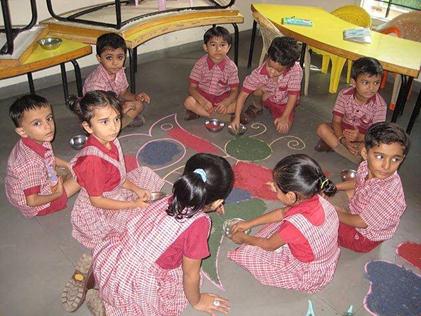
Our ideas were welcomed and we were given total support with any projects suggested. We tried to instil the love and benefits of reading. With support, we were able to get classroom libraries set up so children can use any available time to read in Gujarati, Hindi and English. We also had the pleasure of conducting Parent Information Sessions on raising children and developing literacy at home. Despite being Ramadan, lots of parents came to gain knowledge and to be with us.
Everyone was so eager to learn from us. Little did they realize how much we were learning from them! This experience will help us as we support our students and their families in Toronto. We teach at a public school that is predominately attended by new immigrants from India, Pakistan and Afghanistan. Here are some things we observed that helped us realize some of what we see at our school here...
Children stand to greet the teachers/visitors when they arrive to their class and don’t sit until they are asked to. This is a sign of respect. They may not answer until they are called on. Looking in the eye might be seen as a sign of disrespect. Teachers are addressed by Miss or Sir so when they use that to call us in Canada, it's not that they can't say our names but that is a sign of respect.
Children there keep to the left (unlike here) so if we see them walking to the left, we know why! Jay walking is the only way to cross a street so if children here are not using crosswalks, it’s because they aren't used to them. While most children are quite comfortable with new faces, a few might be scared of seeing anyone unfamiliar. Young children are quite independent and may spend a lot of time without adult supervision. So if they are not always with an adult in Canada, it is not neglect but that they are used to a different system. Most of the learning happens from text books and assessment is done through written exams. There is often an entrance test before a student is given admission to a school. Children who fail may repeat a grade so students may not be placed in classes by age. Students may spend a lot of time copying from the board, completing cloze exercises and memorizing, so if the children are initially lost with open ended tasks requiring higher level thinking, it's because they are not used to them. Children in English Medium schools may not be allowed to talk in their first language (though this was not the case in Mahdi School), so that might explain the resistance to the use of first language at school. These were valuable lessons which will change how we support the children and their families as they adjust to their new lives in Canada.
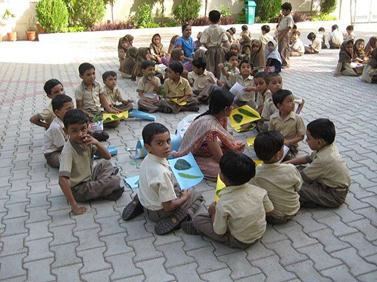
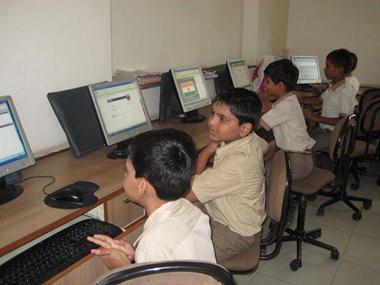
Spending part of Ramadan there was a very spiritual experience. Wanting to meet as many people from diverse communities, I tried to attend Ramadan programs at different centres. The first place, walking distance from the school was Sajjadiyya Park. This lovely apartment complex also sponsored by Sajjadiyya Trust, provided affordable housing to families who had been living in the slums. Many of the children here attend Mahdi School. Everyone from the very young to the very old came to greet and welcome me with love and duas. This evening will always hold fond memories for me!
Next, Sue and I were invited to present at Dilehr Baug Imambargah. The community had prepared for our talk by setting up a computer and LCD projector to view a DVD on reading with children. After the talk, we enjoyed a lovely iftar surrounded with warmth. Sue left her first iftar gathering wanting to attend more!
The third community Ramadan program was at Gulistan Center. Here too I was welcomed and given a tour of the apartment complex where families resided and gathered for ibadat daily. Abbas Bhai who worked at the school was here as a dedicated volunteer reciting Quran with the boys. Young girls listened attentively as the Alimah Zamina Behn, also a teacher at Mahdi School, gave a talk on some deeds to bring us closer to Allah.
We also had an opportunity to visit some boarding schools where orphan and needy children are housed and looked after warmly. One weekend we joined our host, Uncle Muhsin Dharamsi, as he headed to teach young boys at Haji Naji Boarding. We learned about the boarding and its founder, Marhoom Haji Naji, who had the insight to start such a facility in the early years. He was the one who educated and guided many of our forefathers on the Ithansheri path. We also walked to a neighbouring complex run by Visamo Trust. A few buildings housed different projects from orphan support, school and hawza, senior care and a catering place to make people self sufficient. These dedicated volunteers inspired us to pursue similar projects at home.
This experience has enriched our lives personally and professionally. Sue and I hope to continue the journey by networking with our communities here and sharing what we have gained. The school invites any educator or professional interested in helping out, to contact Mahdi school at almahdi14@rediffmail.com.
We have no words to express our gratitude to the dedicated team at Mahdi School. Jazakallah!