Updated 24 October 2012
 The following article is one of a series of reports on ‘DELIVERING THE FUTURE’ where we will share some of The World Federation’s amazing experiences from our recent visit to Pakistan’s flood affected areas. Sayyid Aliraza Naqvi, Assistant Secretary General for Islamic Education and Kaniz Bhimani, Relief Manager for International Relief and Development visited Pakistan’s rural communities to see the progress of our activities in Pakistan between 14 and 21 September 2012.
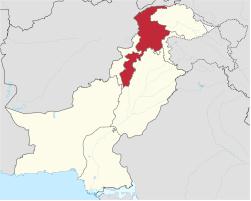
On ‘Day 2’ of our visit, we travelled through the northwest region of Pakistan into Khyber Pakhtunkhwa Province – one of four provinces that make up Pakistan. KPK borders Afghanistan, the Federally Administered Tribal Areas (FATA), Gilgit-Baltistan, Azad Kashmir and Punjab.
Starting our day at 6:30am, we travelled about 200 kilometres by car from Islamabad to the District of Dera Ismaeel Khan (DIK). Along the way, we trekked through damaged and flooded roadways which were the norm throughout the country. We now appreciated why the construction of the 105 Islamic Centres built by The World Federation took a long time to complete.
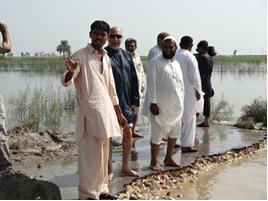
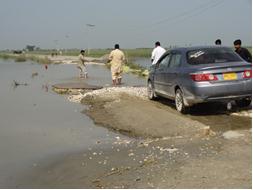
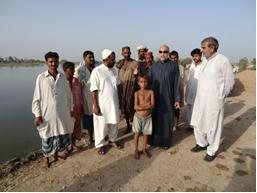
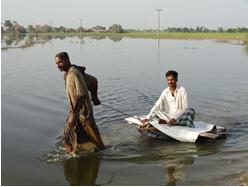
Photos (above): En route, one of the roads was flooded; we had to walk through the waterway to make sure that the water level was low enough for the cars to drive through. Fortunately, for us, our cars made it.
At one place, the road was cut off due to flood waters which had submerged not only the highway, but most of the villages here as well. We had to turn back and find another route to our next stop. One could smell the algae growing in the swamp. Even the cemetery here was submerged in water. There were 5 villages in this area where The World Federation sponsored the construction of 4 Islamic Centres and 100 homes. However, because of the recent rains, they are partly submerged in water; damages will be assessed once the waters recede. We expect minimal damages as these Islamic Centres and homes were built using cement which have proven to withstand erosion and damage from the floodwaters in other areas.
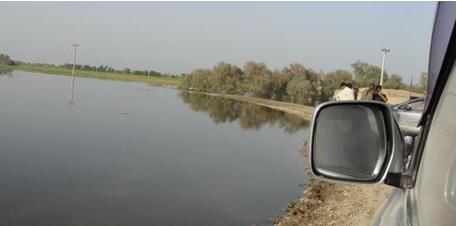
In addition to the worn-out and flooded roads, there were many other challenges that delayed the building of the mosques and imambarghas. These included:
• The villages where the Islamic Centres are built are spread far and wide across Pakistan. Many of these communities are located in the remote areas of the country which are not easy to reach by ground transportation.
• Building materials are available only in major cities and not in or near the villages; therefore, more time was taken to transport these materials from the cities to the villages.
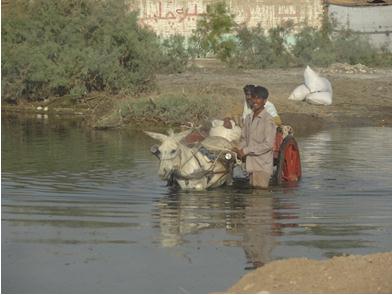
• Transporting building materials to the construction sites was repeatedly a big problem because access to these areas was hindered by poor or flooded roadways. In some villages, building materials had to be carried to the sites by hand and foot, by wheelbarrows or even donkeys. With no tractors available in these rural areas, human resource was limited as well.
• Pilfering of building supplies was a constant problem all across Pakistan.
• Wherever possible, we tried to provide employment opportunities to the local labour force where the Islamic Centres were being built. Unfortunately, in many of these areas there was a shortage of skilled workers.
• Many of the villages we worked in had limited supply and/or access to water. Thus, we had to arrange for temporary water tanks for construction purposes.
Seeing for ourselves the many struggles that the people of Pakistan face each day, we came to appreciate and understand a people who despite their hardships, persevered to make the most of what they had. Everywhere we went, we were greeted by the locals with smiles, warmth and gratitude. Stay tuned for next week when we visit an entire village who has transformed their way of life because of one Islamic Centre we built in their village.
DELIVER THE FUTURE
Donations to the ‘Delivering the Future: Islamic Scholars for Islamic Centres Fund’ will fund the placement of desperately needed religious guides in the 105 newly built Islamic Centres across Pakistan’s scattered and remote villages sponsored by The World Federation. This initiative is essential to ensure that the centres are properly utilised, and that people, especially the children and youth are educated in Islamic teachings. This project is underway and the results are phenomenal. The cost of sponsoring one Islamic Scholar in one Islamic Centre for an entire year is only £965 GBP / $1,540 USD-CAD per year. Donors to this fund are making a real and lifelong impact on thousands of men, women and children who are rediscovering the light and guidance of the Ahlul Bayt (as). Sponsor an Islamic Scholar in full or in part and join us in ‘Delivering the Future’.
DONATE ONLINE:
Donate in Europe
Donate in Canada/USA
Donate in the rest of the World
Jamaat Treasurer:
Donate directly to your Jamaat Treasurer
More Information:
Please email relief@world-federation.org or islamiceducation@world-federation.org