Updated 31 August 2011
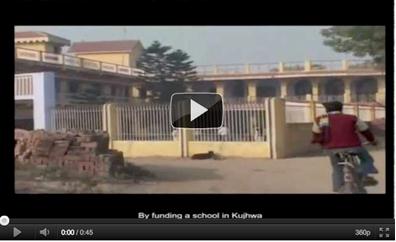 Over 37 million people in Bihar are illiterate in 2011, and Bihar is India’s poorest state with over 77 million people currently living in absolute poverty.
Click above to see how The World Federation school in Khujwa is transforming the village.
On seeing the level of poverty in Khujwa a remote village in Bihar, Marhum Mulla Asghar had a vision to make education accessible for children in Bihar. He and Professor Sami Askari built a World Federation school in Khujwa.
Professor Sami Askari recalls meeting Mulla Asghar when he visited Khujwa in 1992/93. He tells us “When I came in contact with Mulla Asghar he inspired me to become involved in pioneering The World Federation’s activities in Bihar.”
Today Madressah Islamia in Khujwa is achieving the World Federation’s objective by moving the village of Khujwa into self-sufficiency through the provision of education to children and teenagers, who would have otherwise grown up in child labour or in agriculture.
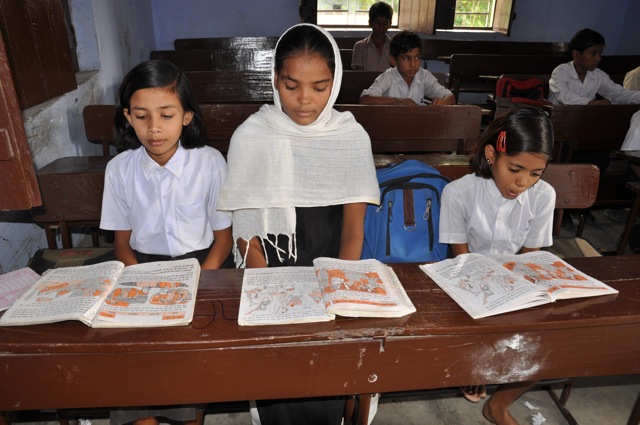
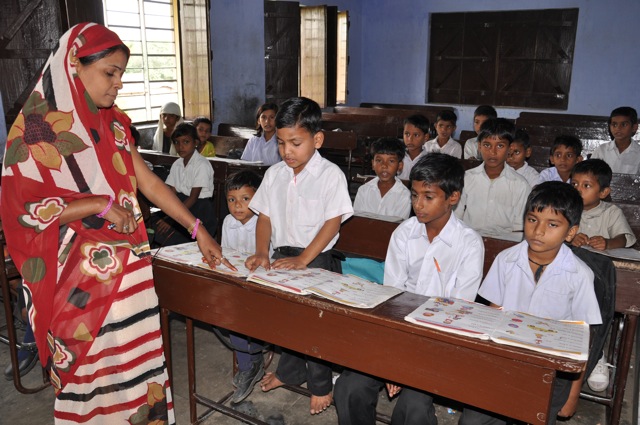
The World Federation’s work in Bihar is two-fold. We currently fund the schools based in Khujwa, Gopalpur and Muzzafarpur. We also sponsor children in other schools in Bihar through our flagship program the Zainabiyya Child Sponsorship scheme. The schools in Khujwa and Gopalpur currently educate 765 pupils. In addition, we also sponsor 290 students in schools across Bihar.
Extensive impoverishment, entrenched hierarchical social divisions and the lack of correlation between educational attainment and job opportunities are often cited in studies as the hurdles to literacy programs in Bihar. Children from lower castes are frequently denied school attendance and harassed when they do attend. In areas where there is no discrimination, poor funding and impoverished families means that children often cannot afford textbooks and stationery.
However the Madressah Islamia Khujwa is head and shoulders apart from the other institutions by providing secular and religious education. Bihar hosts a huge Muslim population who want to study Islam and the Madressah Islamia is currently providing necessary religious education to the children who want to study Islam.
The students who want to study Islam start at the Madressah from a very young age, and wish to complete their religious studies at the Madressah. The Madressah provides a hostel to the poorest students who travel from a far to study at the Madressah.
The other section of the school is the Hindi section that provides a primary education to all the children in and around Khujwa without discrimination and free of charge. However, recently the brightest students in Khujwa will also have the opportunity to go to the English school that provides an Education in English through the CBSE syllabus that allows progression towards further education and beyond.
Undoubtedly the most important part of the school is the girl’s section, as the social problems surrounding many rural areas in India have one thing in common; - discrimination against women in education. The institute provides an education for the future mothers of Bihar, so that the next generation of parents know the importance of education and they can provide the necessary educational support.
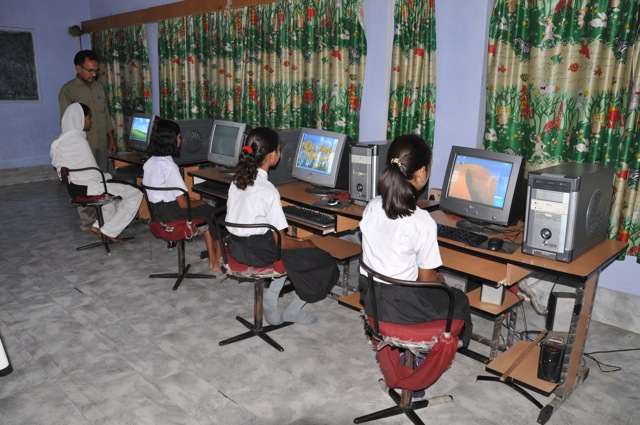
Shan-E-Abbas Hassam, Secretary General of the World Federation on a visit to Khujwa mentioned, “Poor access has kept rural villages in Bihar highly undeveloped. The majority of families here still live in mud houses and breadwinners find the only way they can feed their family is to work long hours in manual jobs.”
He added, “By funding a school in Khujwa The World Federation have helped transform a village whose working generation did not get access to an education into a village where now nearly every child has the opportunity to go to school. Access to education is a key goal of the ZCSS over the years and one which is still in much need today throughout India and the developing world.”
To sponsor a child or to make a donation, email zcss@world-federation.org or donate online.