Updated 24 April 2012
 On Sunday 25th March 2012, leaders from throughout Europe came together to participate in the ‘Striving for a Brighter Future’ initiative for the Council of European Jamaats (CoEJ). It had been determined at an earlier Executive Council meeting that it was necessary for CoEJ to look towards the future and focus on long term goals, and to see how value could be added to member Jamaats. It was hoped that this would, Insha’Allah pave a way and be an avenue for a brighter future, enabling the body to develop with clarity of goals; and in essence be led, truly from the helm.
The key objectives for this away day were threefold:
1. To review the current activities of CoEJ.
2. To determine how CoEJ can best add value to its member jamaats.
3. To prioritise these ideas.
Blessed with beautiful weather; Jamaat representatives, Executive Councillors, Office Bearers and Team Heads were joined at a professional venue by two experienced facilitators. After recitation of the Holy Qur’an, delegates were allocated seats to allow for the cross fertilisation of ideas across jamaats and boards whilst also encouraging passive networking. Questionnaires had been completed beforehand by the majority of jamaats ensuring that the views and opinions of the wider membership were represented, as well as enabling Dr. Sarfraz Jeraj and Dr. Akber Mohamedali as lead facilitators to determine the key themes that would need to be discussed.
During introductions, delegates were provided with an opportunity to highlight their expectations for this project as well as raise any key concerns. Polarisation between CoEJ & Jamaats, duplication in activities and a lack of awareness of what CoEJ is amongst the grassroots were amongst some of the most common issues. None the less, those present were optimistic that this process would Insha’Allah produce a revival of energy, enthusiasm and drive.
A comprehensive review of the current activities of CoEJ reminded those present of the wide range of services provided and focussed attention on how to move forward and avoid repetition. The perception of value that CoEJ adds to jamaats, perceived role of CoEJ, what Jamaats felt CoEJ does well and least well, what CoEJ could do to add value and how Jamaats could support others through CoEJ were discussed in smaller groups and then presented to all those in attendance before the break for salaat and lunch. Throughout these sessions, keen discussion led to numerous ideas and suggestions demonstrating the talent and passion possessed by CoEJ members.
Before lunch the emphasis had been on the content, whereas the second half was dedicated to the processes that could be implemented to realise the various ideas. During the break the facilitators had analysed the findings and summarised the issues into 4 key questions:
1. How can CoEJ support its member jamaats?
2. How can CoEJ develop medium and long term strategies?
3. How can CoEJ be self-sufficient?
4. How can CoEJ be led by its members?
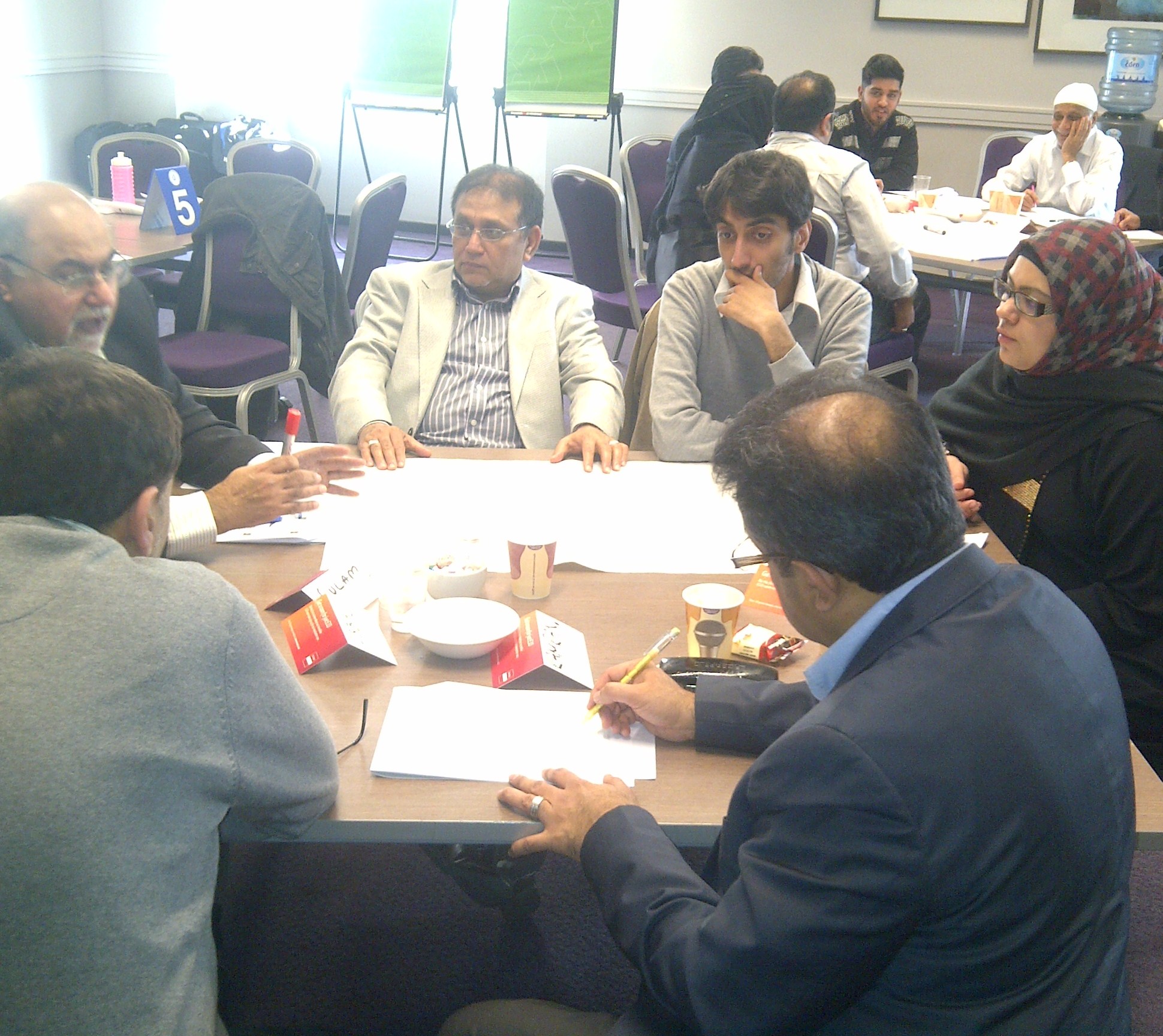
Delegates were encouraged to choose their area of interest and collectively suggest ways in which they could be achieved, both in terms of what CoEJ needs to implement, and what member jamaats can do to help. Participants were allowed to move from group to group to further develop ideas and suggest alternative methods.
When presenting back to the wider groups, it was found that many of the responses were similar as the 4 themes were inherently interlinked. Suggestions such as shifting from a relatively insular approach to one that develops and sustains relationships with external bodies and organisations, developing a central working database, encouraging communication with jamaats and grassroots by potentially carrying out a needs assessment and/or listening exercise and the need to develop a marketing campaign to raise awareness were prevalent.
Due to time constraints, with several participants needing to catch their flights home, it was not possible to prioritise the projects. A steering committee were mandated to continue the work carried out at this session and ensure plans were enforced and data embedded. This consisted of the Capacity Building team supported by Secretariat along with Office Bearers, Executive Councillors and members from jamaats across Europe. Suggestions of setting up an online portal to facilitate this work as well as sending a copy of the final report to Executive Committees of jamaats were given, and it was determined that it would be discussed at a future Executive Council meeting after which a presentation would be prepared in time for the Annual Conference in October.
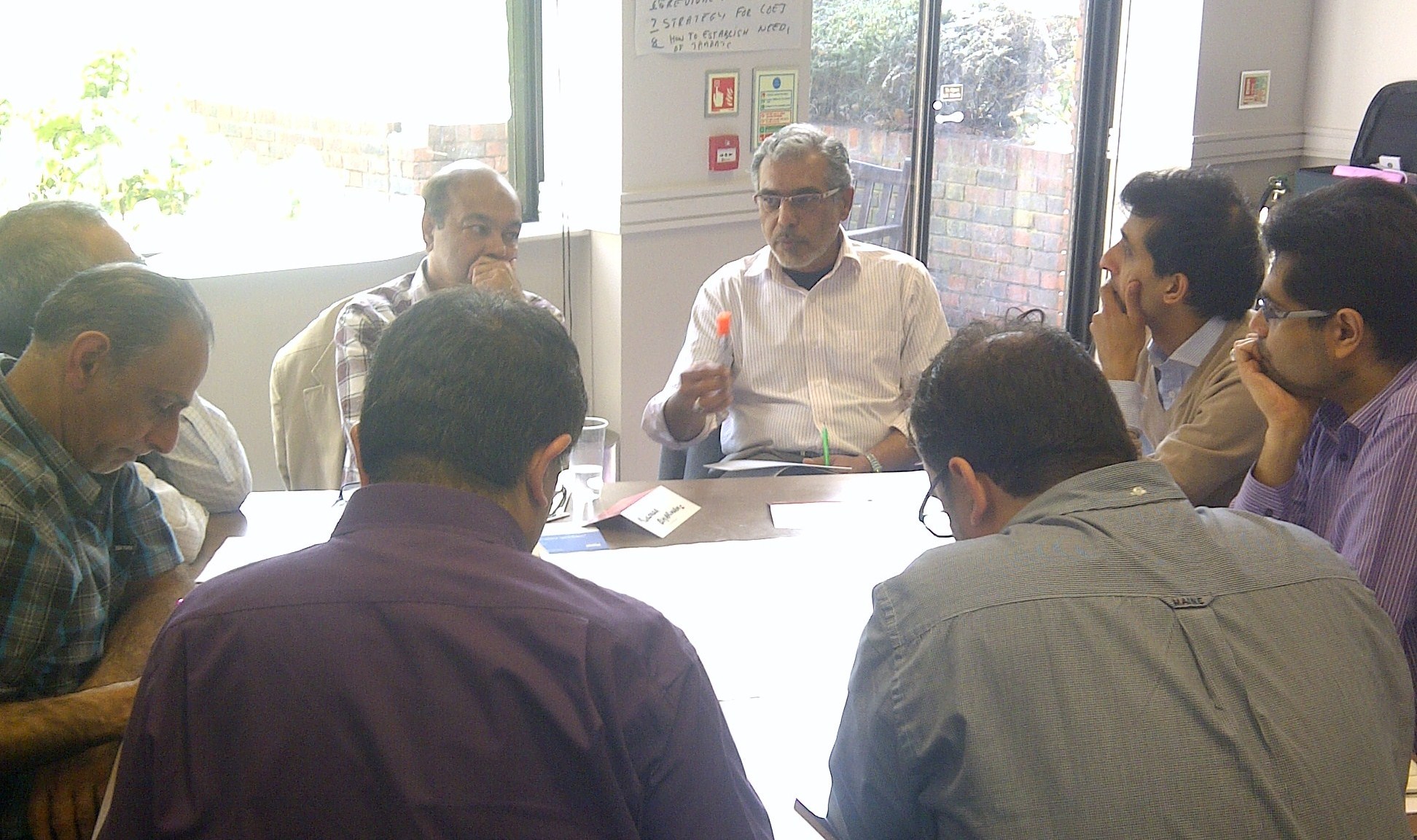 Participants went away from the retreat tired but energised, and hopeful for the future of CoEJ. Comments from those present depicted that this was a much needed exercise, and encouraged the overcoming of barriers. It was clear that this was only the beginning and that there was ‘more hard work yet to come’, but this positive engagement with one another was not only a good learning experience but also demonstrated that CoEJ as a federation is ‘truly striving for a brighter future’.